

- Home
- News
- About
- Books
- World-Building: Fiction by Aleksey Savchenko
- Breaking Into the Games Industry
- Winning in the Game Industry When You’re Neurodivergent
- Media
- Contact
Winning In The Game Industry When You’re Neurodivergent
Understand how Aleksy Savchenko navigates the games industry as a ND professional… and how you can too
A Career That Deliveres — With Friction
The games industry has always attracted people who think differently. Long before ADHD and autism became common workplace terminology, studios were already full of developers obsessing over mechanics, rebuilding systems repeatedly because something felt wrong, or disappearing into production problems for entire nights without properly noticing time passing.
Modern game development still rewards that mindset in many ways and abilities such as deep focus, systems-thinking, pattern recognition and technical obsession can be a huge asset.
But because the games industry runs on iteration, compressed timelines, shifting teams, public feedback, and constant evaluation, that environment can be challenging for neurodiverse professionals to navigate, leading to instability and burnout if not managed the right way.
Aleksey Savchenko was already two decades into his career before he came to understand this.
Aleksey Savchenko's Journey
By his early 40s, Aleksey had worked across design, production, business development, and leadership roles at companies including GSC Game World and Epic Games.
At Epic, he worked on expanding the use of its Unreal Engine across CIS and Eastern Europe, helping studios, publishers, and investors build commercially viable projects around the technology. The role saw him travel the world, attending key industry conferences, visiting studios and leading negotiations as Epic expanded aggressively into a rapidly growing multi-billion-dollar market.
From the outside, his career looked the very definition of successful.
In private, however, things were becoming increasingly unstable. Alcohol had gradually shifted from social drinking into a coping mechanism for chronic stress, overload and insomnia. He experienced a constant mental noise that never properly switched off and was caught in a cycle of intense productivity followed by collapse.
At his lowest ebb, Aleksey feared he was going mad. Finally, in 2024 at the age of 43, he sought answers and was formally diagnosed with ADHD and autism — AuDHD. The diagnosis finally gave him a framework for understanding why the same loop kept repeating, and how to escape it.
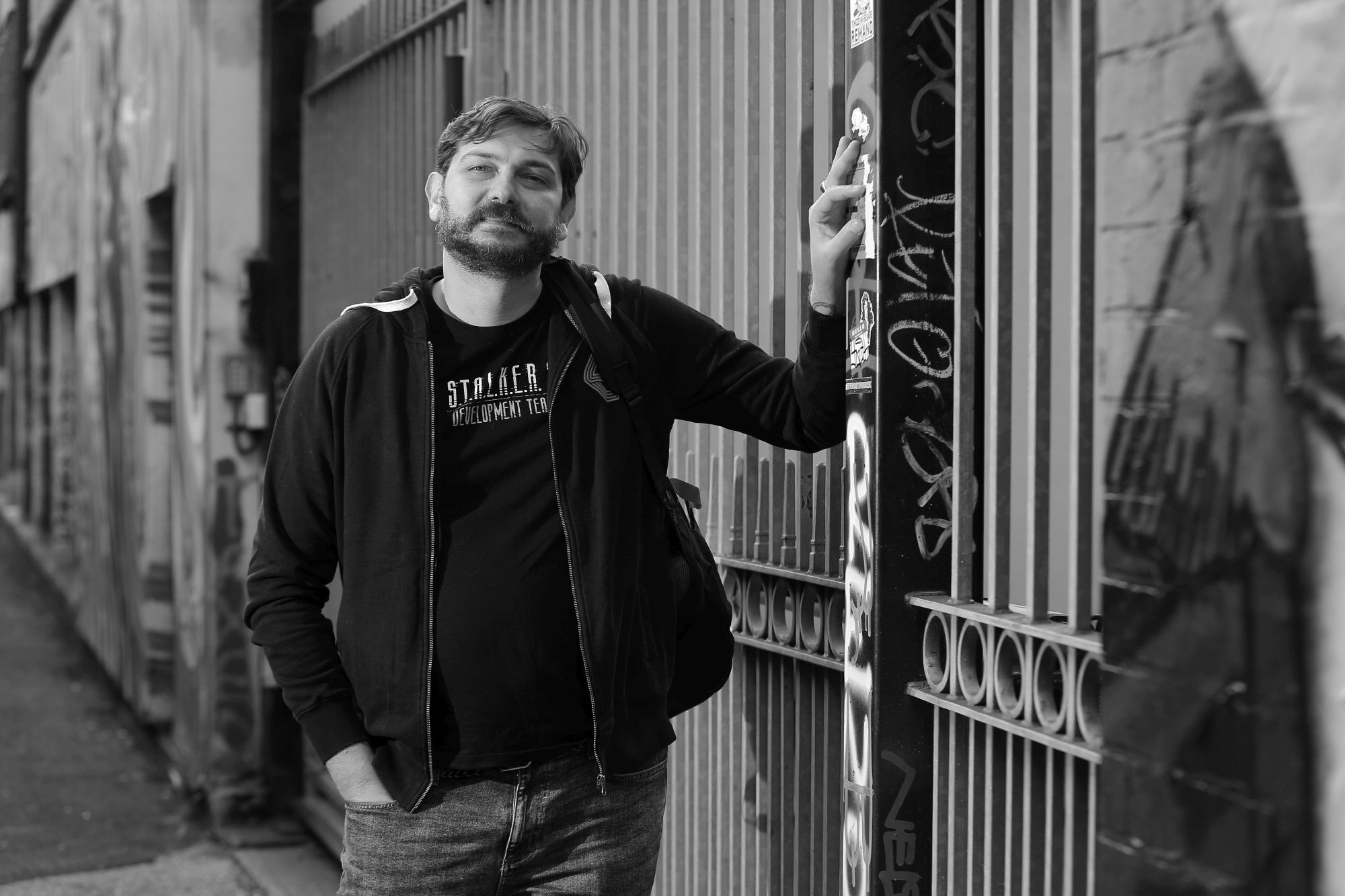
Applying Game Design Thinking to Identity
After the diagnosis, Aleksey began looking back across his career through a different lens. Traits he had previously treated as personality quirks or professional habits started forming recognisable patterns.
The same intensity that had helped him operate inside fast-moving production environments was now turned inwards towards finding a solution. Rather than treating the diagnosis as a label, he approached it like a production problem: something to analyse, map, test, and gradually rebuild in a more stable way.
Instead of drafting production roadmaps, he began mapping cognitive load. Instead of reacting to every opportunity, he started building filters and boundaries. Instead of relying on improvisation, he focused on repeatable systems that reduced overload and instability over time.
This became the foundation of his “Method”. Once Aleksey began treating his behaviour as a system instead of a personal failing, the constant overload that had shaped much of his adult life started easing for the first time in years.
He became aware of masking and more selective about when social performance was actually necessary. Communication, travel, meetings and high-friction interactions were managed more carefully instead of absorbed endlessly by default. He protected his work schedule and his energy. The exhaustion and burnout cycles that had repeatedly destabilised both his work and personal life became easier to anticipate before they spiralled.
Inventory: Clarifying Fit
To help other neurodivergent professionals working in the games industry, Aleksey has formalised his system in his book Method to My Madness.
For professionals already inside the industry — and for those breaking into the games industry — Method to My Madness answers the question of how to build operational sustainability.
Among other things, it addresses:
- Recognise burnout and overload patterns before they become destructive
- Build working structures around ADHD and autism traits rather than against them
- Identify studio environments and roles that match your cognitive profile
- Manage communication fatigue, masking, and social exhaustion more effectively
- Filter opportunities and avoid chronic overcommitment
- Build a sustainable long-term career inside the games industry

Sustainable Ambition
If you recognise yourself in Aleksey’s story, you are not alone.
The games industry is full of intelligent, capable people working diligently but with the wrong operating system running underneath. Many remain highly functional for years without understanding why the same destructive patterns keep repeating beneath the surface.
The good news is that once responsibility, workload, environment, and identity begin aligning properly, ambition becomes far more stable and deliberate. You learn how to work with your wiring rather than against it — identifying the structures, habits, boundaries and production environments that allow long-term performance without constant burnout and collapse.
For some readers, that will mean finally understanding years of exhaustion. For others, it will mean recognising destructive cycles before they become unmanageable. For many, it will simply mean realising they are not broken.
Through his Method, Aleksey has transformed both his career and personal life. You can learn about his inspirational story and explore the full system in Method to My Madness.
For readers who want the practical guidance on its own, Aleksey has also written a companion guide: Methodology to My Madness.
Based on the system detailed in Method, the guide is available as a free download when subscribing to Aleksey Savchenko’s monthly newsletter.
What is it like working in the games industry when you’re neurodivergent?
The games industry often feels like a natural fit at first. It rewards creativity, pattern recognition, and the ability to immerse yourself deeply in complex systems. For many neurodivergent professionals, that environment feels intuitive in a way that school or traditional workplaces never did.
But that same intensity also means there’s very little separation between work and recovery. The line between passion and pressure disappears quickly, and what feels like flow can easily turn into overload without you noticing.
How does neurodivergence actually show up day to day in the games industry?
It usually appears as inconsistency rather than lack of ability. Periods of intense focus and productivity are followed by crashes, missed details, or difficulty switching tasks. Meetings can feel either overstimulating or slow and frustrating, depending on the context.
There’s also a tendency to overcommit — taking on too many ideas, too many responsibilities, or saying yes too quickly. From the outside, it can look like volatility. From the inside, it feels like trying to keep up with a system that’s constantly shifting.
Why is the games industry particularly challenging for neurodivergent professionals?
Because the structure of the industry amplifies those patterns. Game development runs on iteration, urgency, and constant feedback — environments that naturally trigger both ADHD and autistic traits.
The “one more fix” culture creates a loop where overwork feels normal, even rewarded. For someone who already struggles with boundaries, that can quickly become unsustainable. The industry doesn’t create the problem, but it does intensify it.
Is this a question of ability, or something else?
It’s rarely about ability. Many neurodivergent developers perform at a high level, especially in areas that match their strengths — systems thinking, design, world-building, or problem-solving.
The real issue is sustainability. Without the right structure, performance becomes unpredictable. The same traits that drive success can also lead to burnout if they’re not managed properly.
How did Alexksey turn this around — and what is “The Method”?
The turning point came with understanding that the problem wasn’t effort, but the system he was operating within. After diagnosis, Alexei began applying the same thinking he used in game development to his own life — building structure, setting limits, and designing around how his mind actually works.
“The Method” is the result of that process. It treats focus, energy, and behaviour as systems to be managed, not flaws to be fixed. Once that shift happens, the goal stops being survival and starts becoming something much more sustainable: building a career — and a life — that actually works.
Sign up to Aleksey Savchenko’s monthly newsletter and receive a free copy of his book Methodology to my Madness.
© 2026 Aleksey Savchenko. All rights reserved. | Privacy Policy | Website Terms of Use | Cookie Policy
| Play | Cover | Release Label |
Track Title Track Authors |
Page | Buy | Delete |
|---|